
If you live in Temecula or a nearby city and your AC runs a lot, your outdoor unit is doing heavy work almost every warm day. Over time, dust, leaves, grass, and clutter build up around it and quietly choke off airflow. The result is simple. Your AC has to work harder, your home feels less comfortable, and your energy bills climb.
This guide from Temecula Appliance Repair walks you through simple steps to keep your outdoor AC unit clean and unobstructed. You will see exactly what you can safely do yourself, what to leave for a pro, and how this fits into broader HVAC maintenance across Temecula, Murrieta, Wildomar, Menifee, Lake Elsinore, Canyon Lake, Winchester, and Fallbrook.
Why A Clean, Unobstructed Outdoor AC Unit Matters
Your outdoor AC unit is the condenser. It is where your system releases heat from inside your home to the outside air. The fan pulls outdoor air through thin metal fins and across the coils, then blows that warmed air away.
If dirt, leaves, cottonwood fluff, or plant growth cover the fins and block the grille, the unit cannot pull in enough air. The AC must run longer to remove the same amount of heat, which means:
- Higher electric bills
- Hotter rooms and weaker cooling
- More strain on the compressor and fan motor
- A higher chance of breakdowns when you need cooling most
Some of the issues Temecula homeowners face show up in the most common AC problems in Southern California guide, and many of those start with airflow and outdoor unit care. Keeping this unit clean and open is one of the easiest ways to avoid those problems and reduce calls for AC repair service in Southern California.
Safety First: Power Off And Basic Precautions
Before you touch your outdoor AC unit, you need to make it safe to work around. That means turning the power off, even if you only plan to rinse the outside.
You should:
- Switch the thermostat to “Off” inside the house.
- Find the outdoor disconnect box near the condenser and pull the handle or remove the fuse, or turn off the AC breaker at your main panel.
Wait until the fan blades stop and the unit is quiet. This simple step protects you from moving parts and reduces risk if water or tools slip where they should not.
You also want to:
- Avoid opening electrical panels unless you are qualified.
- Keep water away from control boxes, contactors, and any exposed wiring.
- Use stable footing and avoid leaning onto the unit or using it as a step.
If anything about the disconnect, wiring, or panel looks damaged, you should stop and call a professional. Temecula Appliance Repair offers both scheduled service through HVAC services in Temecula and urgent help through their emergency AC repair service in Temecula if you spot something that does not look safe.
Step 1: Clear Loose Debris On And Around The Unit
Once the power is off, you start with the easiest and most important job. You clear away anything that blocks air from reaching the unit.
Look for:
- Leaves and twigs
- Grass clippings and mulch
- Trash, bags, or cardboard
- Spider webs and seed pods
You can pick up larger items by hand and use a small broom or shop vacuum to remove lighter debris from the grille. Many techs recommend that you look around the outdoor unit once a week during peak cooling season, especially after windy days or yard work.
Try not to store tools, garden hoses, pool toys, or furniture against the condenser. Even a small item pressed against the grille can block a surprising amount of airflow and make service harder later.
This same idea of giving equipment space to breathe comes up in the article on how to organize a freezer for better airflow and efficiency, where clear space around coils keeps performance high.
Step 2: Trim Plants And Maintain Proper Clearance
Plants help your yard look great, but they need some distance from your outdoor AC unit. Both energy and HVAC experts suggest clear space around the condenser so air can move freely.
You should aim for:
- At least 2 feet of clear space on all sides of the unit
- About 5 to 6 feet of open space above it
To keep that clearance, you:
- Trim shrubs and hedges back several times during the growing season.
- Keep vines and ground cover from climbing up the cabinet.
- Cut grass so mower or trimmer debris blows away from the unit instead of into it.
If you want to hide the condenser, you can use low shrubs or a decorative screen set several feet away and open on at least one side so air can flow and a technician can reach the unit easily.
Step 3: Gently Wash The Outside Of The Condenser
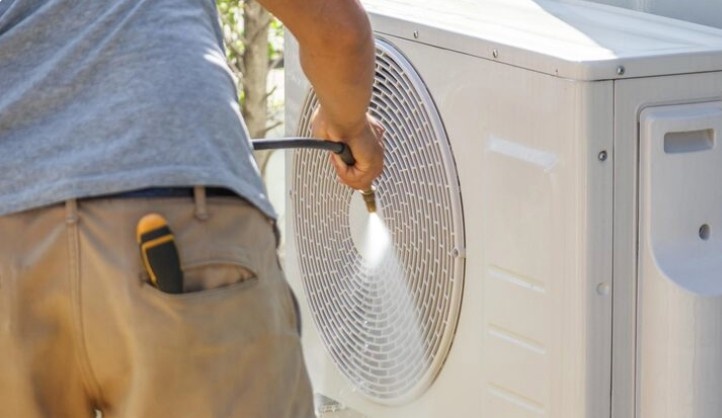
After you clear debris and cut back plants, you can remove the dust and dirt that cling to the fins. This step makes a big difference and you can usually handle it yourself.
Here is a simple process:
- Confirm that power to the outdoor unit is off.
- Attach a regular garden hose with a standard nozzle.
- Use a gentle, low pressure spray.
- Start at the top of the unit and rinse downward, spraying the outside grille and fins at a slight angle.
The goal is to wash away dirt, not force water deep into the cabinet. You should avoid:
- Pressure washers or jet nozzles that can bend fins or damage coils
- Direct spraying onto electrical boxes, connections, or the fan motor
For most Temecula homes, a light rinse once or twice during the cooling season helps keep the condenser breathing well, especially if you live near a dirt road, active construction, or a dusty field.
Step 4: Clean Between The Fins And Inside The Unit (If Safe)
If your outdoor AC unit looks heavily clogged or has not been cleaned in years, you may need a deeper rinse. This can involve spraying from the inside out to push dirt out of the fins instead of further into them.
You should only attempt this if:
- Power is off at the disconnect or breaker
- Your unit allows easy removal of the top fan panel or side panel without straining wires
- You feel comfortable lifting and moving panels carefully
Once open, you can:
- Gently vacuum loose debris from the bottom of the cabinet.
- Use the garden hose on low pressure to spray water from the inside toward the outside, working around the coil ring so you push dirt out.
You should take care to keep water away from the fan motor and any control components. Some homeowners also use coil cleaner, but you should stick to AC‑safe products and follow label directions. Avoid strong household cleaners or bleach that can attack metal or create fumes.
If your coil is caked in mud, cottonwood fluff, or grease, or if access is tight, it is better to schedule a professional cleaning through HVAC services in Temecula or HVAC service near me. An experienced Temecula Appliance Repair technician has the tools and cleaners to do this safely.
Step 5: Straighten Bent Fins And Check The Base
The thin aluminum fins around your outdoor unit are delicate but important. They increase surface area so the coil can release heat faster. Bent fins restrict airflow and reduce efficiency.
You can:
- Use a soft brush to lightly comb across the fins and remove loose debris.
- Use a plastic fin comb or similar tool to gently straighten small bent areas.
You should work slowly and avoid pushing too hard. Sharp tools or aggressive pressure can tear fins or puncture the coil, which then becomes an expensive repair.
While you are there, take a look at the base or pad under the condenser. It should be:
- Reasonably level
- Stable, without obvious sinking or tilting
- Clear of standing water or heavy erosion
A badly tilted pad can stress refrigerant lines and cause vibrations. If you see serious movement or notice oil stains or wet spots that look like refrigerant, you should stop and contact Temecula Appliance Repair for a closer inspection through their book an appliance repair technician in Southern California page.
Step 6: Keep The Area Clear All Year, Including Off‑Season
Outdoor unit care is not a once‑a‑year chore. In a climate like Temecula, where cooling season is long, you get the best results if you work in short, regular checks instead.
You can follow a simple pattern:
- Weekly in summerTake 2–3 minutes to walk around the unit. Remove leaves, trash, or toys and look for new plant growth or nests.
- Monthly in summerConfirm your 2‑foot clearance. Do a quick rinse if coils look dusty. Check that no one has moved storage or furniture next to the unit.
- FallClear piles of leaves that collect around the base. If your system does not use the outdoor unit in winter, you can consider a breathable cover that keeps out big debris but does not trap moisture.
- WinterKeep the area clear of yard items. In rare heavy rain events, make sure water can drain away from the pad.
To keep everything simple, you can fold these outdoor AC checks into the daily, weekly, and yearly appliance maintenance checklist for busy families that Temecula Appliance Repair already shares.
When To Call Temecula Appliance Repair For Professional Cleaning
DIY outdoor unit cleaning has limits. Sometimes you need a professional to protect your equipment and your safety.
You should call Temecula Appliance Repair if you notice:
- Weak cooling or warm air from vents even after you clear debris and rinse the unit
- Very loud or unusual noises from the outdoor unit
- Coils that are heavily matted or clogged where you cannot see the fins
- Breakers that trip or any signs of electrical issues
- Ice on refrigerant lines, repeated short cycling, or burning smells around the system
During a professional visit, a technician can:
- Perform a deep coil cleaning with proper cleaners and water pressure
- Check refrigerant levels and look for leaks
- Inspect fan motors, capacitors, and electrical connections
- Confirm that the outdoor unit and indoor components are working together correctly
They can also help you connect what you see outside with symptoms inside. If you have weak airflow at some vents or hot and cold spots, their guides on why you have weak airflow from some vents but not others and what causes uneven temperatures between rooms and basic balancing tips give more detail.
If your system stops cooling during a heat wave, you can call for help using the emergency AC repair service in Temecula resource. If you live near the lake, the article on top signs you need emergency AC repair in Lake Elsinore explains which symptoms mean you should act quickly.
How Keeping Your Outdoor Unit Clean Fits Into Bigger HVAC Maintenance
Keeping your outdoor AC unit clean and unobstructed is one piece of a larger comfort and efficiency picture. You get the best results if you link it with:
- Regular air filter changes, as explained in how often to change air filters and what happens if you don’t, which focuses on indoor airflow.
- Smart thermostat habits, covered in how to choose the right thermostat settings for comfort and efficiency year‑round.
- Periodic duct cleaning and system checks, outlined in how often you should clean your air ducts and the seasonal HVAC maintenance checklist for Southern California.
A clean outdoor unit protects your compressor and helps your AC shed heat quickly. Clean filters keep indoor airflow strong. Good thermostat settings prevent the system from short cycling or running harder than needed. Together, these steps reduce wear, lower bills, and keep your Temecula home comfortable through long summers.
If you are ever unsure which tasks are safe to handle yourself, the article on DIY appliance repair vs professional service gives a clear framework to decide.
FAQs
How often should you clean your outdoor AC unit?
You should check your outdoor AC unit for debris at least once a week during peak cooling season and do a more thorough cleaning, including a gentle rinse, at least once or twice a year. Many homeowners choose spring and mid‑summer for these deeper cleanings.
How far should plants and objects be from the outdoor unit?
You should keep at least two feet of clear space on all sides of your outdoor AC unit and about five to six feet of open space above it. Trim shrubs and branches and keep furniture, tools, and decorations away from the condenser to maintain good airflow.
Can you use a pressure washer to clean the outdoor AC unit?
You should not use a pressure washer on your outdoor AC unit. High pressure water can bend fins, damage coils, and force water into electrical components. A gentle spray from a garden hose is enough for most homeowners.
Do you need to turn off power before cleaning the outdoor unit?
Yes. You should always turn off the power to the outdoor unit at the disconnect or breaker before cleaning, especially before using water or opening panels. This helps prevent the fan from starting while you work and lowers the risk of electrical hazards.
When should you call a professional instead of cleaning it yourself?
You should call a professional if the coils are heavily clogged, if you see bent or damaged coils, if you still have poor cooling after basic cleaning, or if you notice noises, leaks, or tripped breakers. A Temecula Appliance Repair technician can safely deep‑clean the unit and inspect the rest of your system to catch any underlying problems.

Eric Adams
Eric is the lead repair expert at Appliance Repair Southern California. With 17+ years of experience, he has built a reputation for providing fast, reliable, and high-quality repair services across Southern California. His expertise covers a wide range of appliances, including refrigerators, ovens, dishwashers, and washing machines. Eric is committed to exceptional customer service and ensuring every repair is done right the first time. Under his leadership, Appliance Repair Southern California continues to be a trusted name in the industry.