
If you feel like you are always too warm or too cold and your energy bills still seem high, your thermostat settings may not match what your home in Temecula really needs. The good news is that you do not have to guess. You can follow clear temperature ranges and simple habits that work for our Southern California climate and still stay comfortable.
In this guide from Temecula Appliance Repair, you will see how to choose the right thermostat settings for comfort and efficiency year‑round. You will also learn how to use schedules, setbacks, and small adjustments so your system works with you instead of against you.
How Thermostat Settings Affect Comfort And Energy Use
Your thermostat tells your HVAC system when to turn on and when to turn off. When the indoor temperature drifts away from your setting, the thermostat starts a heating or cooling cycle. When the temperature hits that setting, the thermostat tells the system to stop.
Every extra degree of cooling in summer or heating in winter costs energy. The farther you push the indoor temperature away from the outdoor temperature, the more work your system must do. That is why energy experts suggest you aim for comfortable ranges instead of very low or very high numbers.
Most people feel comfortable somewhere between about 68°F and 72°F, but you can often shift by one or two degrees and hardly feel the difference. Those small shifts add up on your bill over the year, especially in a place like Temecula where air conditioning works hard for long stretches.
Recommended Temperature Ranges For Summer Comfort And Savings
Summer is when many Temecula homes use the most energy. That is why smart cooling settings matter.
A good starting point for cooling is:
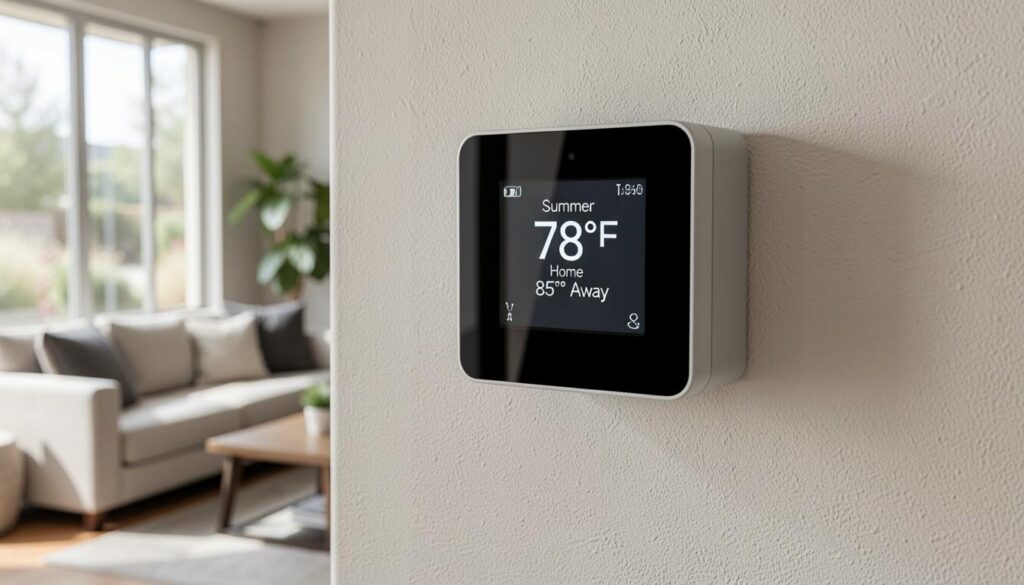
- Set your thermostat to about 78°F when you are home and awake. This range is widely recommended as a balance between comfort and energy savings.
If you are used to cooler settings, 78°F may sound high. However, you can usually adapt by using ceiling fans and light clothing. Fans help move air over your skin so 78°F feels closer to 74–76°F.
When you leave the house for more than four hours, you can raise the setpoint to around 85°F or about 7–10°F above your at‑home temperature. You should keep pets and any heat‑sensitive items in mind, but many homes see clear savings with this simple change.
At night, you can usually keep the thermostat close to your daytime setting and rely on fans for extra comfort. Many homeowners stick with 78°F or nudge it slightly higher if nights are cooler and they like to sleep with light bedding.
If you are not sure where to land, start at 76°F, see how you feel, then move up by one degree each night until you notice discomfort. Stop there and drop back one degree.
Recommended Temperature Ranges For Winter Comfort And Savings
Temecula winters are mild compared to many places, but heater use still adds up. Smart heating settings help you stay warm without overspending.
For most homes, a good winter setup is:
- Set the thermostat to about 68°F when you are home and awake.
This level keeps many people comfortable while reducing how hard your heater has to work. If 68°F feels cool at first, you can try 69°F or 70°F and use warm clothing, socks, and blankets instead of jumping to 72°F or higher. Each extra degree of heat adds cost, especially if your home has weak insulation.
For sleep or long away periods, you can lower the setting by about 7–10°F. That often means 60–62°F overnight or while you are at work. The U.S. Department of Energy notes that this kind of setback over 8 hours a day can save around 10 percent on heating costs over a season.
If you ever feel that your heater runs constantly but still does not warm the home, Temecula Appliance Repair’s article on top causes of a heater not blowing warm air can help you check for equipment issues before you keep raising the thermostat.
Spring And Fall “Shoulder Season” Settings
Spring and fall in Temecula give you a chance to rest your HVAC system and save extra energy. During these shoulder seasons, outdoor temperatures often hover in a range where you can use less mechanical heating and cooling.
You can aim for a comfort band near 68–72°F in these months and try to:
- Turn the system off whenever outdoor conditions feel pleasant and use natural ventilation.
- Open windows in the morning and evening when temperatures are mild, then close them and use blinds once the sun warms the house.
During these times, you may not need strict thermostat targets. Instead, you focus on comfort with a mix of light HVAC use, fans, and fresh air.
At the start of each new season, it helps to review your thermostat programs. Many people forget to update schedules, so their winter plan runs into spring or their summer plan keeps the AC working harder than needed into fall. A quick review every few months fits well with seasonal HVAC maintenance for Southern California.
How To Use Setbacks And Schedules For Year‑Round Efficiency
Setbacks are planned temperature changes that line up with your daily routine. Instead of holding a single setting all day, you raise or lower it when you do not need full comfort.
In general, if you move your thermostat by about 7–10°F for at least 8 hours a day, you can save around 10 percent a year on heating and cooling costs.
Here are two simple examples you can use as a starting point.
Weekday winter schedule
- 6:00 a.m. to 8:00 a.m.
68°F while you get ready for the day. - 8:00 a.m. to 5:00 p.m.
60–62°F while everyone is away at work or school. - 5:00 p.m. to 10:00 p.m.
68°F for evening comfort. - 10:00 p.m. to 6:00 a.m.
60–62°F while you sleep.
Weekday summer schedule
- 6:00 a.m. to 8:00 a.m.
78°F while you are home and moving around. - 8:00 a.m. to 5:00 p.m.
85°F while the house is empty, with blinds closed to block sun. - 5:00 p.m. to 10:00 p.m.
78°F for evening comfort. - 10:00 p.m. to 6:00 a.m.
78–80°F with bedroom fans on for comfortable sleep.
These patterns work best when your equipment and thermostat work correctly. If you notice your system turning on and off very frequently at these settings, you may be seeing short cycling. Temecula Appliance Repair explains what that is in their guide on HVAC short cycling and why it is bad for your system.
Choosing Settings Based On Your Thermostat Type
Your thermostat type affects how easy it is to use year‑round settings and schedules.
Manual thermostats
You set one temperature and change it yourself. You have full control but must remember every setback and reset. This makes it harder to stick to a plan.
Programmable thermostats
These let you create automatic schedules. Common options include:
- 7‑day programming, where you set a separate schedule for every day of the week.
- 5‑2 programming, where weekdays share a schedule and weekends share another.
- 5‑1‑1 programming, where weekdays share a schedule and Saturday and Sunday each get their own.
You can define times such as wake, leave, return, and sleep and assign temperatures for each. This makes seasonal setback habits much easier to maintain.
Smart thermostats
Smart thermostats add more features, such as:
- Learning your patterns over time
- Adjusting based on sensors or your phone’s location
- Providing energy reports and suggestions
They can make it simple to apply the 78°F and 68°F guidelines and setbacks without constant manual changes.
If your current thermostat is hard to use or does not behave as expected, Temecula Appliance Repair’s guide on how to replace a thermostat and compare digital and manual models can help you think through an upgrade. Their article on common thermostat problems and how to troubleshoot them is also useful if you suspect a fault.
Habits That Make Thermostat Settings Feel More Comfortable
Your comfort at a given thermostat setting depends on more than the number on the screen. Simple habits help your body and home work with those settings.
Helpful habits include:
- Use ceiling fans in summer when you set 78°F. Fans do not lower air temperature, but they increase evaporation on your skin so your body feels cooler.
- Use blinds, curtains, and shades to block direct sun on hot afternoons. This reduces heat gain so the AC does not fight solar load all day.
- In winter, open curtains on sunny days to let in warmth, then close them at night to keep heat inside.
- Seal gaps around doors and windows so drafts do not make a normal temperature feel chilly. A small draft can make 68°F feel much colder.
You can support these habits with regular maintenance. Temecula Appliance Repair shows you how in their articles on appliance maintenance tips to avoid costly repairs and the seasonal HVAC maintenance checklist for Southern California.
Special Considerations For Temecula Homes And Southern California Climate
Your location matters. Temecula and nearby areas see long cooling seasons, bright sun, and cooler nights, plus mild but sometimes damp winter periods. Your thermostat settings need to reflect that.
In summer, daytime highs can drive AC use, but evenings often cool down. You can:
- Vent the home in the late evening or early morning when outdoor air is cooler.
- Close windows and curtains before the day heats up, then let the AC hold 78°F more easily.
- Use ceiling fans so you can keep the setpoint a bit higher without feeling hot.
In winter, temperatures rarely stay below freezing for long, so you usually do not need very high heating setpoints. Instead, you can stay near 68°F, use layers, and focus on system health and building envelope rather than running the thermostat higher.
Because air conditioning does so much work in this region, it helps to be aware of common issues. Temecula Appliance Repair covers these in their guides on 5 common AC problems in Southern California, why your AC might blow warm air, and how to choose the right size AC unit for Southern California homes.
When your current system struggles to deliver comfort at reasonable thermostat settings, their Temecula‑focused guide on whether to repair or replace your HVAC can help you weigh your options.
How Temecula Appliance Repair Helps You Dial In The Right Settings
You can do a lot with thermostat numbers and simple habits, but you do not have to figure everything out alone. Temecula Appliance Repair helps you match thermostat settings, equipment, and home conditions.
During a thermostat and comfort visit, a technician can:
- Check where your thermostat is installed and see if it reads correctly.
- Review your current summer and winter schedules and suggest concrete changes, such as moving a 72°F summer setting up to 76–78°F or adding overnight setbacks.
- Test how your system responds to setpoint changes and confirm that equipment and ducts can deliver the comfort your settings promise.
- Look for issues like weak airflow, noisy operation, or short cycling that may reduce comfort even at good thermostat settings.
Where it makes sense, they can also recommend:
- A thermostat upgrade to a programmable or smart model.
- Zoning or ductless mini‑split systems for homes with big room‑to‑room differences.
- Maintenance and repairs that help your system handle year‑round comfort more efficiently.
If you ever see urgent signs along with thermostat problems, such as sudden loss of cooling, leaks, or burning smells, you can also use their emergency AC repair service in Temecula for faster support.
FAQs
What is the best thermostat setting in summer for comfort and efficiency?
Most experts suggest about 78°F while you are home and awake in summer for a good balance of comfort and energy savings. When you leave for more than four hours, raising the setting to around 85°F can reduce cooling costs.
What is the best thermostat setting in winter?
A setting of about 68°F when you are home and awake is widely recommended for winter comfort and efficiency. Lowering the setting by 7–10°F while you sleep or are away can save around 10 percent a year on heating.
Is it better to leave the thermostat at one temperature all day?
You usually save more by using set schedules instead of a single fixed temperature. Keeping 68°F or 78°F when you are home and using larger setbacks while you sleep or are away for eight hours works better than one constant setting around the clock.
How do ceiling fans and blinds help thermostat efficiency?
Ceiling fans make the air feel cooler in summer, so you can stay comfortable at 78°F instead of dropping the thermostat lower. Blinds and curtains help control heat gain and heat loss, which keeps your home comfortable without extreme thermostat settings.
How can Temecula Appliance Repair help you choose the right settings?
Temecula Appliance Repair can look at your home, your HVAC system, and your thermostat habits, then suggest specific summer and winter setpoints, schedules, and upgrades that work for Southern California conditions and your comfort goals.

Eric Adams
Eric is the lead repair expert at Appliance Repair Southern California. With 17+ years of experience, he has built a reputation for providing fast, reliable, and high-quality repair services across Southern California. His expertise covers a wide range of appliances, including refrigerators, ovens, dishwashers, and washing machines. Eric is committed to exceptional customer service and ensuring every repair is done right the first time. Under his leadership, Appliance Repair Southern California continues to be a trusted name in the industry.