
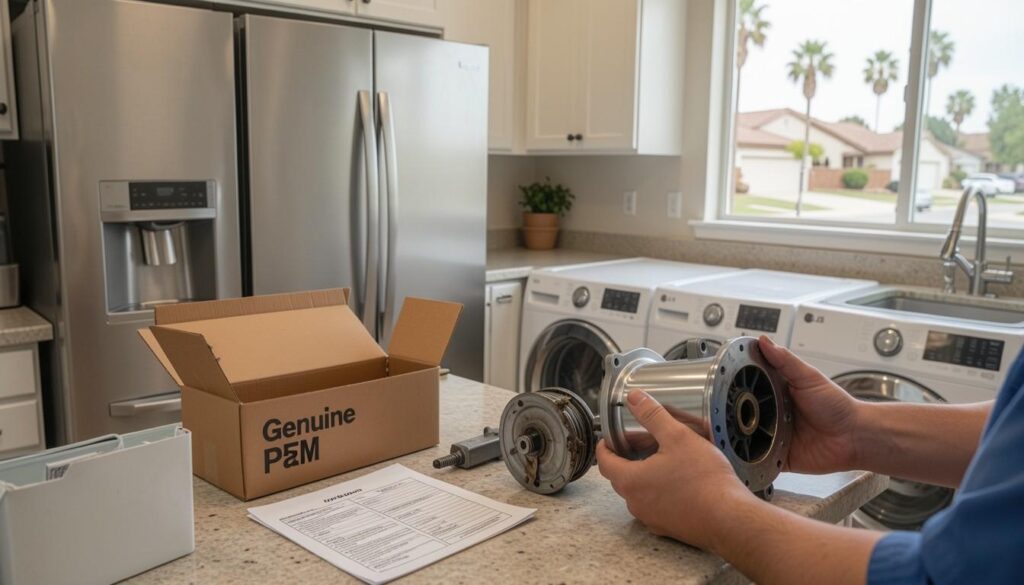
You depend on your refrigerator, washer, dryer, and other appliances every single day. You expect them to be safe, reliable, and ready to go when you press start. Yet the parts inside those machines decide how safely they run and how long they last, especially once you start replacing worn components.
This is where genuine appliance parts make a real difference for Temecula homeowners. In this guide from Temecula Appliance Repair, you will see why using genuine or OEM parts matters for safety, performance, warranty protection, and long‑term cost. You will also see real examples for fridges, washers, and dryers, so you can make better choices the next time you schedule a repair.
What “Genuine” or OEM Appliance Parts Actually Are
You see the phrase “use genuine parts only” in manuals, but it helps to know what that actually means. Genuine or OEM (original equipment manufacturer) parts come from the same brand that built your appliance or from an approved supplier that meets that brand’s engineering standards. They are built to match the exact size, material, and performance of the original part your appliance had when it left the factory.
Aftermarket parts are different. Third‑party companies build them to be “compatible,” but they do not always match the original design. In many cases, they use different materials, different wiring specs, or different tolerances. Some aftermarket parts are decent, but many are cheaper for a reason. They often skip the deeper testing and quality control that OEM parts go through.
Why Safety Standards and Certifications Matter
Every major home appliance must meet safety standards before it reaches your kitchen or laundry room. Independent organizations like UL test appliances and components for electrical safety, fire risk, and mechanical reliability. UL and similar labs look at how wiring handles heat, how insulation holds up, and how components behave under stress.
Genuine parts form part of that original safety evaluation. Wiring, motors, boards, and heating elements are all tested as a system. If you swap in a part that does not meet the same rating, you change that system. Articles about UL certification explain that certified or listed components must meet strict requirements for voltage, current, temperature, and insulation. If a replacement part does not match those ratings, you risk overheating, shorts, or premature failure.
How Genuine Parts Protect Your Home (Safety First)
Safety should be your first concern. Cheap parts may look similar, but they can behave very differently once they are under load in a hot, vibrating appliance. Service guides and safety articles point out that low‑quality or wrong parts can lead to fire hazards, shocks, leaks, or sudden breakdowns.
Here are a few simple examples:
- A non‑approved dryer heating element can run hotter than the original, especially if the vent is a little restricted. That extra heat can increase lint ignition risk and damage internal wiring.
- A generic oven thermostat that does not read temperature correctly can let the oven run far above the set point, which can overheat insulation and control boards.
- A cheap drain pump on a washer or dishwasher can crack under pressure or leak at the seals, which sends water onto floors and into cabinets.
If you want to reduce dryer fire risk, you can also look at Dryer vent cleaning tips for fire safety.
For gas ovens that do not heat right, you can read Gas oven not heating.
Genuine parts do not remove all risk, but they keep your appliance closer to the way it was tested and certified. That lowers the odds of an unsafe failure.
Why Genuine Parts Help Appliances Last Longer
You want your appliances to last as long as possible, especially with today’s prices. Genuine parts help with that goal because they are engineered for your exact model. OEM vs aftermarket comparisons show that OEM parts usually use better materials, match precise tolerances, and go through durability testing for that specific appliance.
When you use genuine parts:
- Motors, pumps, and bearings fit correctly and do not place extra stress on shafts, seals, or mounts.
- Seals, gaskets, and hoses match the right hardness and thickness for the heat, pressure, and chemicals they face.
- Control boards and sensors are calibrated to talk to each other the way the original design intended.
Aftermarket parts may look close, but even small differences in fit or performance can increase vibration, noise, or heat. Over time, that leads to more failures and a shorter life for the appliance.
If you are thinking about repair vs replacement for a dryer, you can read Dryer lifespan: repair or replace.
For washers, you can check How to extend life of washing machine.
Refrigerator Examples: Compressors, Fans, and Water System Parts
Your refrigerator and freezer run all day in Temecula heat, so parts matter a lot. Genuine parts help keep temperatures stable and prevent leaks.
For compressors and controls, genuine parts matter because the sealed system operates within tight limits. In many fridges, the control board and compressor start gear work together to manage run time and temperature. Cheap substitute boards or relay kits can cause hard starts, short cycling, or poor cooling. That can shorten compressor life, which is one of the most expensive failures you can face.
Fan motors are another key example. Condenser and evaporator fans move air through coils to remove heat. OEM fans match the original airflow and power draw. Generic fans that move less air or pull the wrong current can lead to warm spots, ice buildup, or overheating around the compressor.
Water valves, filters, and tubing also matter. Low‑quality valves or lines may not handle full water pressure for long. They can crack or leak at fittings, especially when they cycle on and off many times a day for ice and water. That can cause water damage inside your kitchen even when the fridge “still works.”
If you already see water, you can read Refrigerator leaking water causes and fixes.
If you want to understand cooling problems better, this guide helps you tell compressor vs thermostat issues apart.
For brand‑specific service, you can also review Samsung refrigerator repair and Refrigerator repair in Southern California.
Washer Examples: Pumps, Hoses, and Bearings
Washers handle a tough job. They move heavy loads, spin at high speeds, and deal with hot water and detergent. Genuine parts help them handle that stress.
Drain pumps are a common failure point. OEM pumps are built for specific flow rates, mounting points, and noise levels. They also match your control board timing. Generic pumps may vibrate more, run at the wrong speed, or fail early. That can cause repeat drain issues, leaks, and error codes.
Hoses and door boots live through constant flexing and contact with detergent and hot water. Genuine hoses and gaskets use materials tested for that environment. Cheaper parts may harden, crack, or lose their seal faster, which leads to leaks and water damage around your washer.
Bearings and seals are another area where genuine parts matter. If a bearing kit does not match the original dimensions or quality, it can fail again soon after installation. That wastes labor and may push you toward a full replacement.
If you see water, start with Washing machine leaking.
If your washer shakes hard, use Washing machine shaking violently during spin.
For smell issues, check Why washer smells bad and how to fix it and How to prevent mold in your washing machine.
If you are thinking about a pump change, this guide shows what that job really involves: How to replace a washer drain pump
For brand‑specific support, you can also see: LG washer repair in Southern California
Dryer Examples: Heating Elements, Belts, and Sensors
Your dryer uses high heat and moving parts, so part quality has a direct effect on safety and longevity.
Heating elements and thermostats control how hot your dryer gets. OEM elements match the wattage and size that your drum and vent system can handle. Genuine thermostats and thermal fuses are calibrated to that element. Aftermarket parts that run hotter or cycle wrong can overheat the cabinet, damage clothes, and raise fire risk. Safety and UL articles stress that temperature control is a critical safety feature.
Belts, idler pulleys, and rollers keep the drum turning smoothly. OEM parts match the correct length, tension, and hardness. Cheaper belts can stretch or fray quickly. Worn pulleys and rollers can cause squealing or thumping and place extra strain on the motor. That leads to more breakdowns and more repair bills.
Moisture and temperature sensors tell the control board when clothes are dry. Genuine sensors feed accurate signals. Generic sensors may cause over‑drying, which wears out fabrics and wastes energy, or under‑drying, which leaves loads damp and forces extra cycles.
If your dryer already makes noise, you can read Why is my dryer making a loud thumping noise and Dryer belt problems and fixes.
If the dryer will not heat, try Speed Queen dryer not heating and Fix the d80 error on your LG dryer.
You can also check Dryer leaving clothes damp after full cycle and Dryer not starting at all.
How Genuine Parts Support Warranty Coverage
Your repair choices do not just affect performance. They also affect your warranty. Warranty and service guides explain that using non‑approved parts can be a reason for manufacturers or extended warranty providers to deny claims.
Many appliance warranties and service contracts expect that:
- You use genuine or approved parts during the warranty period.
- You avoid modifications that change how the appliance was built.
- You can show that parts and labor met the maker’s standards.
If a failure traces back to a cheap aftermarket part, the provider can say that the part caused or contributed to the problem. That can leave you paying out of pocket for both the bad part and the damage it caused. Using genuine parts makes it easier to show that you followed the rules.
For more detail on this topic, you can read Understanding appliance warranties and what can void them.
You can also review Appliance repair vs replacement: when is it worth fixing.
Performance and Efficiency: OEM vs Aftermarket in Daily Use
You feel part quality every day in how your appliance runs. OEM vs aftermarket comparisons show clear differences in daily performance. OEM parts keep your machine close to factory behavior. That means familiar noise levels, steady cycle times, and the energy use your model was rated for.
Generic parts can change those patterns:
- A weak fan motor in a fridge can make it run longer and use more power.
- A slow drain pump in a washer can extend cycle times and strain the motor.
- A poor sensor in a dryer can run cycles past the point of dryness, which wastes energy and wears out clothes.
Over time, these small changes add up on your electric bill and in wear on the appliance. Genuine parts help you keep the performance and efficiency you expected when you bought the appliance.
If you want broader maintenance tips that also help efficiency, see Appliance maintenance tips to avoid costly repairs.
Long‑Term Cost: Why Genuine Parts Can Be More Cost‑Effective
It is easy to focus on the price on today’s invoice. However, real cost plays out across years. Articles that compare OEM and aftermarket parts point out that while OEM parts often cost more up front, they usually last longer and protect other components better. That can make them cheaper over the life of the appliance.
Here is how genuine parts save you money long term:
- You replace the same part less often, so you pay for less repeat labor.
- You reduce the risk of collateral damage from leaks, shorts, or overheating.
- You help the appliance reach or exceed its expected lifespan, which delays a full replacement purchase.
You can think about this in the context of whole appliances using When to replace old appliances, a room‑by‑room guide.
For dryers specifically, go back to Dryer lifespan: repair or replace.
DIY Repairs vs Calling a Pro: Parts Decisions and Safety
You may enjoy fixing things yourself or want to save money with DIY repairs. Plenty of homeowners feel the same. Yet DIY guides also list common mistakes that lead to extra damage and higher repair bills, especially when people use the wrong parts or tools. Some of those mistakes also risk warranty coverage.
Here is a simple way to decide:
- If your appliance is still under warranty, read your warranty terms before any internal repair. If the document mentions “unauthorized service” or “non‑approved parts,” you should call a professional instead of opening the unit.
- If your appliance is out of warranty and you choose DIY, use genuine parts and follow the service manual or a trusted guide carefully, and avoid gas, sealed system, or high‑voltage work.
- For complex jobs, it is safer and often cheaper over time to hire a qualified technician who uses genuine parts and knows your brand well.
You can think through this choice with DIY appliance repair vs professional service: pros and cons.
If you decide to call a pro in Temecula, you can book an appliance repair technician in Southern California here.
How Temecula Appliance Repair Uses Genuine Parts for Better Outcomes
Temecula Appliance Repair focuses on long‑term results for your home, not quick fixes that come back to haunt you. That is why the team prefers genuine or OEM‑equivalent parts whenever possible for major brands such as Whirlpool, GE, LG, Bosch, Samsung, and others. Industry comparisons show that this approach improves reliability and reduces repeat failures.
Here is what that means for you:
- Technicians match parts to your exact model and serial, so compatibility and safety stay intact.
- Your repairs stay closer to manufacturer standards, which supports warranty coverage and performance.
- You get clear explanations of part options and costs, so you can decide what makes sense for your budget and your appliance.
To see how this looks by brand, you can review:
- Whirlpool appliance repair
- GE appliance repair services
- LG appliance repair service
- Bosch appliance repair company
For fast help with leaks, noises, or breakdowns, you can also use Emergency appliance repair service in Temecula.
FAQs
What is a genuine or OEM appliance part?
A genuine or OEM appliance part comes from the original manufacturer or an approved supplier and matches the specs and materials used in the appliance’s design and testing.
Are aftermarket appliance parts always bad?
Aftermarket parts are not always bad, but they may not match OEM quality, testing, or safety standards, and some can reduce lifespan, performance, or warranty protection.
Can using non‑genuine parts void my appliance warranty?
Yes. Many manufacturers and extended warranty providers can deny claims if non‑approved parts contribute to a failure or safety issue, especially during the warranty period.
Do genuine parts really last longer?
Genuine parts often last longer because they use higher quality materials, follow strict specs, and go through durability testing designed for that specific appliance.
Are genuine parts worth the higher price?
In many cases, yes. Genuine parts help keep your appliance safe, reduce repeat repairs, protect other components, and support warranty coverage, which usually saves money over time.
How do I know if a part is genuine?
You can check part numbers, packaging, and documentation, or order through the brand or a trusted supplier. Genuine parts and assemblies may also carry safety marks such as UL labels.

Eric Adams
Eric is the lead repair expert at Appliance Repair Southern California. With 17+ years of experience, he has built a reputation for providing fast, reliable, and high-quality repair services across Southern California. His expertise covers a wide range of appliances, including refrigerators, ovens, dishwashers, and washing machines. Eric is committed to exceptional customer service and ensuring every repair is done right the first time. Under his leadership, Appliance Repair Southern California continues to be a trusted name in the industry.