
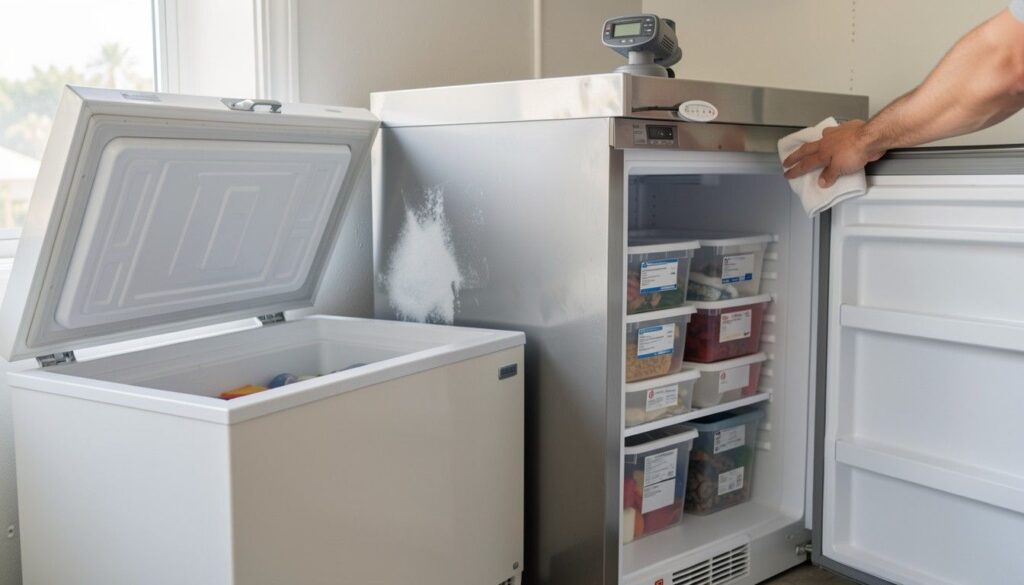
You buy a freezer for one reason. You want steady cold storage that protects your groceries, meal prep, and bulk buys. However, a freezer does not stay reliable on its own. Ice builds up, dust clogs vents, and door seals wear out. Then your freezer runs longer, costs more to operate, and may stop holding temperature.
Chest freezers and upright freezers both keep food frozen, but they need different care. A chest freezer often holds cold air better because cold air stays low when you lift the lid. An upright freezer loses cold air faster because cold air spills out when you open the door. Those design differences change how frost forms, how often you defrost, and what you check each month.
In this guide, you will learn how to maintain a chest freezer vs an upright freezer, plus the key differences that matter in real life. If your freezer in Temecula will not hold temperature, makes loud noise, or builds heavy frost fast, you can contact Temecula Appliance Repair for diagnosis and repair.
Chest Freezer vs Upright Freezer: What’s the Real Difference for Maintenance?
Your freezer design drives your maintenance tasks. A chest freezer opens from the top, so cold air stays in the box longer when you open it. That helps temperature stay steady, which can reduce stress on the compressor.
An upright freezer opens from the front. Cold air can spill out faster during loading and unloading. Because of that, an upright depends more on door habits, gasket strength, and airflow paths inside the cabinet. If you block vents with food packages, you can create warm spots and frost patches.
Many chest freezers use manual defrost. Many upright freezers use frost-free (automatic defrost). Manual defrost means fewer defrost parts, but you do a full defrost when frost builds up. Frost-free means the freezer manages frost for you, but it adds heaters, sensors, and timers that can fail.
Which Freezer Type Is Easier to Maintain (and Why)?
You can maintain either type easily if you match the unit to your habits. A chest freezer often feels easier week to week. You do fewer daily checks because the lid seals well and the cold air stays put. However, you still plan a periodic manual defrost, and you will move food out during that job.
An upright freezer often feels easier for organization. You can see your food on shelves, so you waste less time searching with the door open. That helps temperature stability. At the same time, upright maintenance can feel more frequent because you must protect airflow and watch the door gasket.
So, “easier” depends on your use. If you store bulk meat and you open the freezer less often, a chest freezer fits. If you open the freezer many times per day, an upright can reduce search time and reduce warm air exposure.
Key Entities You Need to Understand (So You Maintain the Right Parts)
Freezer maintenance gets easier when you know the parts that matter. You do not need repair training. You need simple awareness.
Here are the key entities you should recognize:
- Door gasket or lid gasket. This rubber seal keeps warm air out and cold air in. A weak gasket drives frost and temperature swings.
- Condenser coils and condenser fan (on many models). Coils dump heat to the room. Dust on coils makes the unit work harder.
- Thermostat or control board. This part controls temperature and cycle timing.
- Evaporator coils (inside walls or behind panels). These coils create cold.
- Evaporator fan (common in uprights, especially frost-free). This fan moves cold air through the cabinet.
- Defrost system parts in frost-free uprights. This group can include a defrost heater, timer, or sensor.
- Drain port or drain channel (on some frost-free designs). This helps move defrost water.
When you understand these parts, you can spot the difference between normal frost and a system problem.
Ideal Temperature, Placement, and Power (Applies to Both)
Temperature consistency protects food and reduces compressor wear. Keep your freezer at 0°F (-18°C) or colder, and confirm it with a freezer thermometer instead of trusting the dial alone.
Placement also matters. Put the freezer on a level surface. Keep space around vents and exterior panels so heat can escape. Some models release heat through the walls, so they need clearance even if you do not see back coils.
Power matters too. Use a grounded outlet and avoid extension cords when you can. If you lose power, keep the door closed as much as possible. Then check temperature after power returns before you restock new food.
Weekly Maintenance: What to Do in 5 Minutes (Both Types)
A weekly routine keeps small issues from turning into big ones. You can do these checks fast.
- Check the door or lid closes with no resistance. Packaging should not block the seal.
- Wipe the handle and the door edge. Food oils can transfer to the gasket and reduce grip.
- Listen for new noises. A new rattle, buzz, or scraping sound can signal a fan issue in an upright.
- Check your thermometer or your temperature display. A slow rise often shows up before full failure.
If you store a freezer in a garage, you should also look for dust buildup around vents. Dust shows up fast in garages and utility rooms.
Monthly Maintenance: Cleaning and Performance Checks (Both Types)
Once a month, you clean and inspect. This routine prevents odor, protects the gasket, and helps the freezer run efficiently.
First, wipe interior spills with a damp cloth and mild dish detergent. Repair Clinic recommends periodic interior cleaning with a damp rag and a small amount of dish detergent.
Next, check the gasket. Wipe it with warm water and dry it. Whirlpool’s preventative maintenance guidance also reminds you to clean gaskets monthly with warm water.
Then, look at exterior vents and coil areas. If you see dust, plan a coil cleaning session. Repair Clinic recommends cleaning condenser coils and the cooling fan about once per year because dust buildup makes the unit work harder.
Finally, confirm shelves, baskets, and bins sit flat. A shelf that sticks out can prevent full door closure in an upright.
Chest Freezer Maintenance Routine (Type-Specific)
A chest freezer often runs quietly and holds temperature well. Still, it needs type-specific care, especially if it is manual defrost.
Start with organization. A chest freezer becomes hard to maintain when you cannot find items fast. Long lid-open time lets warm, humid air enter, and humidity becomes frost later. Use baskets, bins, and labels so you can grab items quickly.
You can also use an airflow-friendly layout. Keep flat items against the walls and keep frequently used items near the top. For a deeper system, use this guide on organizing a freezer for better airflow and efficiency.
Next, watch frost. Frost is normal in manual defrost designs, but thick frost steals space and makes the freezer work harder. If you see ice building into “walls,” you plan a defrost before it blocks the lid seal. A common rule of thumb is to defrost when frost becomes noticeable and starts reducing space. A manual-defrost explainer also notes that you often defrost when frost reaches around a quarter to a half inch thick.
Finally, keep the rim seal clean. The lid gasket presses against the rim. Sticky residue on the rim can create air leaks and frost.
Upright Freezer Maintenance Routine (Type-Specific)
Upright freezer maintenance depends on airflow and door discipline. Most uprights use shelves and vents. That means air must move freely.
Start with vent awareness. Do not pack food tight against interior vents. You leave small gaps for air to flow. If you block vents, you may see warm shelves or soft ice cream even when the freezer runs.
Next, manage frequent openings. Each opening drops cold air out the front. So you should organize by zones. Put daily items at eye level. Put long-term items on lower shelves. This reduces search time and reduces humid air entry.
If your upright is frost-free, remember one key point. Frost-free does not mean “never frost.” A frost-free unit can still get frost if you have a gasket leak or repeated door openings. It can also frost if the automatic defrost system fails.
If you see heavy frost on the back panel, you may have a defrost system problem. In that case, you can start with simple checks, but you may need service.
Defrosting: Chest vs Upright (Best Practices and Timing)
Defrosting is where chest freezer vs upright freezer maintenance differs the most.
Chest freezer (manual defrost)
You defrost a chest freezer when frost buildup reduces space, affects lid closure, or starts forming thick ice sheets. Manufacturer maintenance tables also list defrosting yearly or as needed for chest and upright units.
Use safe steps:
- Move food to coolers with ice or to another freezer.
- Unplug the freezer.
- Place towels around the base.
- Let ice melt naturally or speed it up with bowls of warm water.
- Wipe the interior dry before you restart.
Do not chip ice with sharp tools. You can puncture the liner and cause permanent damage.
Upright freezer (frost-free)
You rarely need a full manual defrost, but it can help if you see stubborn ice around the door area. If you see heavy frost inside a frost-free upright, you should suspect a gasket leak or a defrost system fault.
If the freezer does not defrost properly, you may also see warmer temperatures. If that happens, this guide on why a freezer is not cold enough while the fridge still works can help you narrow the cause.
Door Gasket and Seal Care (One of the Biggest Differences)
Gasket care often decides whether you fight frost every month. The gasket keeps cold air inside and warm air outside. Home Depot’s freezer maintenance tips explain that a worn gasket makes the freezer use more energy, and replacement can be inexpensive and easy.
Upright freezers often need more gasket attention because you open the door often and gravity can pull on the door over time. That can lead to small gaps. Chest freezers often seal well, but they can still leak if the rim stays dirty or if the lid goes out of alignment.
Use this simple routine:
- Wipe the gasket with warm water and a soft cloth.
- Dry it fully so it stays grippy.
- Do a paper test. Close the door on a strip of paper. If the paper slides out with no resistance, the seal may be weak.
For a deeper gasket cleaning method, use this internal guide on the best way to clean rubber door gaskets to prevent mold.
Condenser Coils and Venting: How Each Type Collects Dust
Dust is a silent freezer killer. Condenser coils and fans attract lint, pet hair, and garage dust. Repair Clinic advises cleaning condenser coils and the cooling fan about once per year because buildup makes the unit work harder.
Chest freezers often sit in garages, so they often collect more dust around the base and rear. Upright freezers often sit in utility rooms where lint can build up near vents.
Use this safe coil cleaning routine:
- Unplug the freezer.
- Locate the vent or coil area.
- Use a vacuum with a brush attachment.
- Remove loose dust without bending fins.
Whirlpool’s preventative maintenance guidance also lists condenser cleaning as a yearly task for many models, and it reminds you to check your owner’s manual for coil access and model-specific instructions.
If you want to protect other cold appliances too, you can also use this internal guide on cleaning refrigerator condenser coils safely.
Preventing Odors, Ice Buildup, and Freezer Burn (Both Types)
You can avoid most freezer problems with simple habits.
Odor control
Use sealed containers and freezer bags. Add an open box of baking soda if you want extra odor control. Clean spills quickly so they do not harden and smell later.
Ice buildup control
Reduce door-open time. Cool hot food before you load it. Warm food adds moisture, and moisture becomes frost. Keep the gasket clean so humid air does not leak in.
Freezer burn prevention
Use airtight packaging. Remove as much air as possible. Label and date items. Rotate older items forward so you use them first.
If you struggle with ice forming in sheets or thick frost on a back wall, read this internal guide on why a freezer forms thick ice on the back wall.
Common Problems and What They Usually Mean (Chest vs Upright)
Some problems show up more often in one type than the other. Your goal is to spot them early.
Chest freezer common issues
- Heavy frost walls. This often points to long lid-open time, a dirty rim, or a weak lid seal.
- Lid not sealing. This can come from packaging blocking the rim or a warped gasket.
- Slow recovery after loading. This can happen after you add a lot of unfrozen food at once.
- Loud compressor. This can point to dust-clogged coils or a failing part.
Upright freezer common issues
- Frost on the back panel. This can signal a defrost system issue in a frost-free design.
- Warm shelves or uneven temps. This often ties to blocked airflow or a fan problem.
- Door pops open or does not close flat. This often points to alignment or gasket issues.
- Frequent cycling. This can point to air leaks, dust on coils, or a control problem.
If you suspect a control issue, this internal article on compressor vs thermostat problems can help you understand what is more likely before you call.
When to Call a Pro
You should call a pro when your freezer will not hold temperature, runs nonstop, builds heavy frost fast, or makes loud grinding sounds. You should also call if you smell burning or you see electrical issues. Repair resources also highlight unusual noises, inconsistent temperatures, and excessive frost as signs that need prompt service.
A technician can test the thermostat, fans, defrost system, and sealed system performance. They can also check door alignment and gasket fit. If you store expensive bulk groceries, a fast diagnosis can save you real money.
If you want local help, you can schedule service with Temecula Appliance Repair. If you need urgent support, use the emergency appliance repair service in Temecula. If your issue points to a dedicated freezer service visit, you can also review freezer repair in Temecula.
FAQs
Is a chest freezer lower maintenance than an upright freezer?
Should you clean the freezer gasket?
Yes. A clean gasket seals better, reduces energy waste, and helps prevent frost and temperature swings. Manufacturer and repair guidance also calls out regular gasket cleaning.
How do you organize a chest freezer to reduce maintenance?
Use baskets and bins, label items, keep most-used items near the top, and rotate older items forward so you keep lid-open time short.
Can overpacking cause freezer problems?
Yes. Uprights need airflow around vents. Chest freezers need the lid to close fully and items not to block the rim seal.

Eric Adams
Eric is the lead repair expert at Appliance Repair Southern California. With 17+ years of experience, he has built a reputation for providing fast, reliable, and high-quality repair services across Southern California. His expertise covers a wide range of appliances, including refrigerators, ovens, dishwashers, and washing machines. Eric is committed to exceptional customer service and ensuring every repair is done right the first time. Under his leadership, Appliance Repair Southern California continues to be a trusted name in the industry.